The Smartphone That Thinks It’s a DSLR - And Somehow Pulls It Off
The Smartphone That Thinks It’s a DSLR - And Somehow Pulls It Off
Smartphone cameras have spent years chasing one goal: replace your real camera. But most of them cheat. They rely on AI tricks, digital zoom, and aggressive processing to simulate what a proper lens does naturally.
Then comes the Vivo X300 Ultra camera kit—and instead of faking it, it does something radical:
It turns your phone into an actual camera system.
Not metaphorically. Literally.
And once you understand what Vivo is doing here, it starts to feel like the future of smartphone photography just took a hard left turn.
A Phone… With Lenses You Can Attach?
At first glance, the idea sounds ridiculous.
A smartphone with detachable telephoto lenses? A grip? Accessories? It feels like a gimmick designed for marketing hype.
Even The Verge reviewer walked in thinking the same.
But after actually using it—at real events, with moving subjects and messy lighting—the conclusion flipped completely. What seemed like a niche experiment turned into something unexpectedly powerful and… fun. (The Verge)
That’s the key word here: fun.
Because for the first time in years, a phone camera isn’t just smart—it’s engaging.
The Real Star: Optical Zoom Done Right
Let’s talk about the biggest problem in smartphone photography: zoom.
Most phones claim insane zoom levels, but behind the scenes it’s mostly digital cropping. The result? Loss of detail, artificial sharpening, and inconsistent results.
The X300 Ultra takes a completely different route.
It uses:
A 200MP telephoto sensor
Native optical zoom
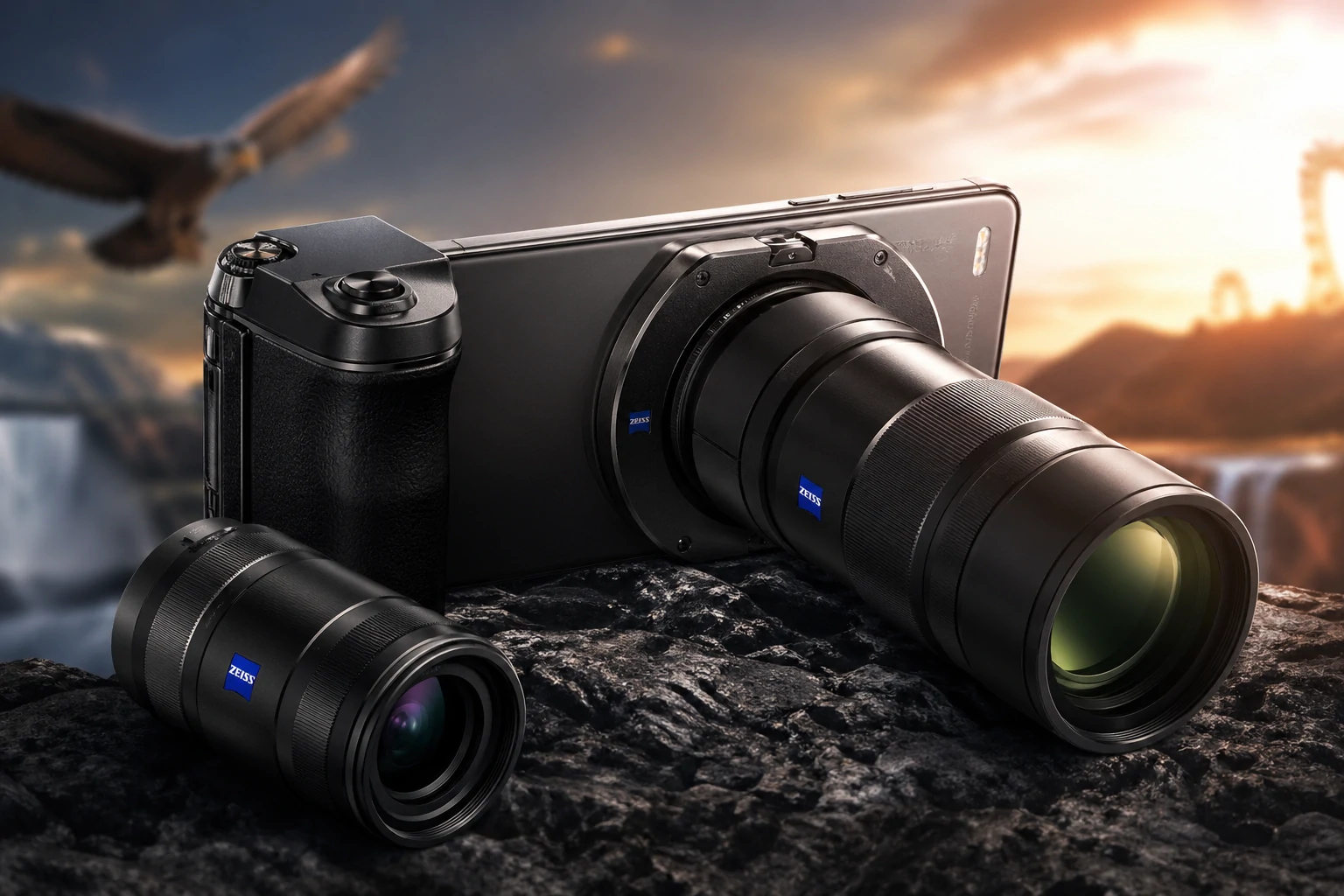
And optional 200mm and 400mm external telephoto lenses
That last part changes everything.
Instead of stretching pixels, you’re physically extending the lens system—just like a DSLR. The result is sharper images, better composition, and a level of control smartphones usually can’t touch. (The Verge)
This is not zoom enhancement.
This is real optics.
From Phone to Camera Rig in Seconds
The camera kit isn’t just about lenses—it’s a full ecosystem.
You get:
A dedicated camera grip
Lens mounting system
Physical handling closer to a compact camera
Even accessories like mounts and straps in the full kit (Notebookcheck)
This transforms how you shoot.
Instead of holding a slippery slab of glass, you’re gripping something stable. Instead of tapping the screen awkwardly, you’re composing shots with intent.
It’s the difference between taking photos… and actually shooting them.
Where It Actually Shines: Real-World Use
This isn’t just lab-tested hype.
The Verge reviewer used the setup in chaotic environments like fairs and demolition events—places where:
Subjects move fast
Lighting is unpredictable
Zoom actually matters
And surprisingly, the system held up.
Even with its bulk and complexity, the optical zoom delivered better results than typical smartphone cameras, especially when capturing distant action. (The Verge)
That’s a huge deal.
Because most phones collapse under pressure in exactly these scenarios.
The Downsides (Because Yes, They Exist)
Let’s not pretend this is perfect.
There are real trade-offs:
It’s bulky — attaching lenses makes your phone less portable
It’s slower — swapping lenses isn’t instant
Autofocus can struggle in tricky situations
It’s niche — not everyone wants a camera rig in their pocket
This is not for casual users.
It’s for people who actually care about photography.
The Bigger Picture: A New Direction for Smartphones
Here’s where things get interesting.
The Verge doesn’t just praise the X300 Ultra—they suggest something bigger:
Other smartphone brands should copy this idea. (The Verge)
Why?
Because smartphone innovation has hit a wall.
Every year we get:
Slightly better AI
Slightly better processing
Slightly better “fake” zoom
But Vivo is doing something fundamentally different:
It’s bringing back hardware innovation.
And not just any hardware—modular, expandable photography tools.
Why This Changes Everything
This approach solves a core problem:
Phones can’t physically fit large optics.
So instead of forcing everything inside the device, Vivo moves part of the system outside.
It’s simple.
It’s old-school.
And ironically—it feels futuristic.
Because instead of pretending a phone can replace a DSLR, it builds a bridge between the two.
Final Verdict: Gimmick or Genius?
At first glance, the Vivo X300 Ultra camera kit looks like a gimmick.
After using it, it feels like a glimpse of the future.
It won’t replace traditional smartphones overnight.
It won’t appeal to everyone.
But for creators, photographers, and tech enthusiasts—it unlocks something we haven’t seen in years:
A smartphone camera that doesn’t just rely on software tricks…
…but actually evolves the hardware game.
And that’s exactly what this industry needed.