The BlackBerry Autopsy: How the King of QWERTY Became a Ghost of the Past
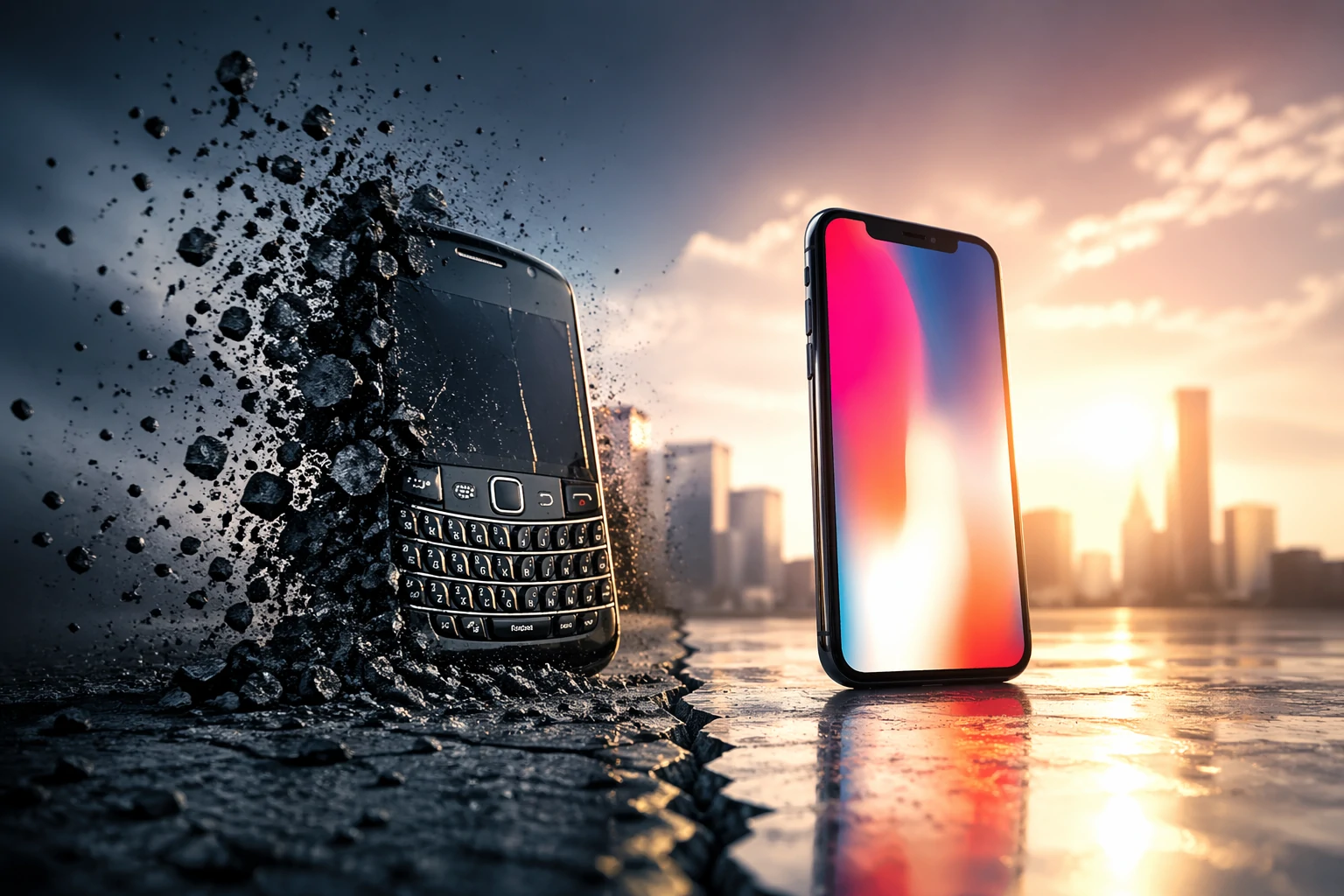
Before the "Slab" era of glass and aluminum took over our pockets, there was one name that signaled you had arrived: THE BlackBerry. If you held a Bold or a Curve in 2008, you weren't just holding a phone; you were holding a status symbol. But in the tech world, yesterday’s status symbol is today’s paperweight.
As we look back, the fall of BlackBerry (Research In Motion) isn't just a product failure, but it’s a masterclass in how overconfidence can blind even the smartest engineers to a revolution staring them in the face.
The Golden TImes: When "Push" Changed the World
In the early 2000s, BlackBerry owned the professional world. They didn't just make a phone; they built a mobile office.
Push Email: They pioneered instant messaging before we even had a name for it.
The Keyboard: The physical QWERTY was the gold standard for speed and precision.
BBM (BlackBerry Messenger): Long before WhatsApp, BBM was the original "blue bubble" status symbol.
Security: Their encryption was so tight that world leaders and celebrities wouldn't use anything else.
What was the Turning Point...? The iPhone "Toy"
Everything changed in 2007. When Steve Jobs pulled the iPhone out of his pocket, BlackBerry leadership dismissed it as a "toy" with poor battery life and a "frustrating" glass keyboard. They believed business users would never trade a tactile keyboard for a touchscreen.
This was the fatal error. They underestimated how quickly a "consumer" device could become an "enterprise" necessity.
The Anatomy of a Collapse
Why did the fall happen so fast? It was a "perfect storm" of bad timing and rigid thinking:
1. The Touchscreen Denial
When they finally reacted, they launched the BlackBerry Storm. It was a disaster. The screen literally "clicked" when pressed, leading to laggy performance and unresponsive input. By the time they figured out touch, Apple and Samsung had already perfected the interface.
2. The App Desert
While Android and iOS were building thriving ecosystems with Instagram and Snapchat, BlackBerry App World felt like a ghost town. Developers didn't want to build for a dying OS and users didn't want a phone that couldn't run their favorite apps.
3. Hoarding BBM
BlackBerry’s greatest asset was BBM. They kept it exclusive to BlackBerry hardware for years to force people to buy their phones. By the time they opened it to Android and iOS, WhatsApp had already won the war.
The Pivot: Life After the Phone
Eventually, the bleeding had to stop. BlackBerry officially stopped making their own hardware and pivoted to what they always did best: Security and Software.
Today, BlackBerry is a quiet giant in:
QNX Automotive Software: Powering the infotainment and safety systems in millions of cars.
Cybersecurity: Providing enterprise-grade protection for government and IoT infrastructure.
The BS Insider Takeaway
The legacy of BlackBerry is a warning to every tech giant in 2026: Standing still is the fastest way to fall behind. Technology is a river; if you don't swim with the current of innovation, you will eventually hit the rocks. BlackBerry introduced the world to mobile productivity, but they forgot that productivity also needs to be fun, accessible, and fast.