The One-Way Mirror: Why Android Users Switch to iPhone (and Never Look Back)
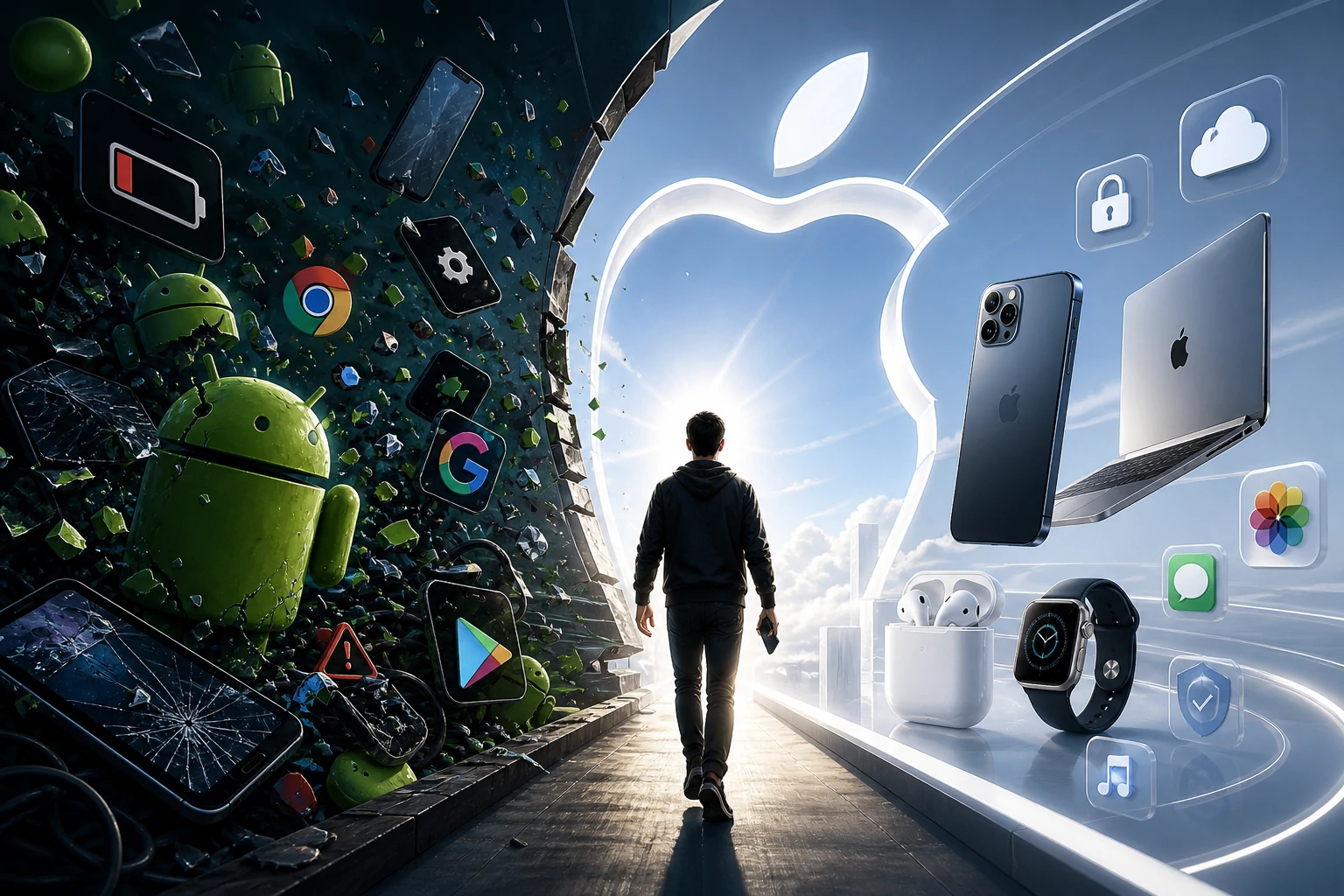
In the world of IT, we talk a lot about "user retention" and "frictionless environments." But there is one migration pattern that defies standard logic: the massive influx of Android users moving to iOS, compared to the tiny trickle of iPhone users heading the other way.
Is the iPhone objectively "better" hardware? Not always. Is Android "broken"? Absolutely not. So, why the lopsided migration?
As an IT professional, I’ve looked past the marketing gloss. Here is the deep-dive into the "Golden Handcuffs" and the psychological architecture that keeps people in the Apple camp.
1The "Walled Garden" is Actually a Safety Net
From a systems perspective, Apple practices Vertical Integration. They design the silicon (A-series chips), the hardware, and the OS.
When an Android user switches, they often experience "Optimization Relief." On Android, Google builds the software, Qualcomm builds the chip, and Samsung/Xiaomi/OPPO builds the phone. This "fragmentation" can lead to micro-stutters or battery drain. On iPhone, because the hardware and software are "married," the system feels inherently more stable.
The High Cost of Leaving
The biggest reason iPhone users don't leave isn't just that they love the phone, it’s that leaving is a technical nightmare.
The iMessage Factor: It’s not just about "Blue Bubbles." It’s about high-quality media sharing, end-to-end encryption, and seamless group chats that break the moment you move to a "Green Bubble."
The iCloud Anchor: Once your passwords, 10 years of family photos, and health data are synced via iCloud, the "work" required to migrate that to Google Photos or a third-party manager feels like a second job.
The Reality Check of "Resale Value"
As an IT expert, I look at the Total Cost of Ownership (TCO). If you buy a high-end Android flagship for $1,000, its value drops by nearly 50–60% within a year. A flagship iPhone usually retains 70–80% of its value. Android users often switch when they realize their two-year-old phone is worth pennies on the dollar, whereas their friend’s iPhone 13 is still a high-value asset. It’s a smarter financial move for the long term.
The 6-Year Promise (Software Longevity)
While Samsung and Google have recently promised 7 years of updates, Apple has been doing it for a decade. An iPhone user knows their device will receive the latest OS features and security patches for half a decade or more. For an Android user tired of "planned obsolescence" or waiting months for their carrier to push an update, the instant gratification of iOS updates is a major pull factor.
The "Human" Factor which Actually Works
We tech experts love to tinker. We love custom ROMs, sideloading, and file management. But the average human just wants their phone to be a tool, not a project.
Consistency: Every iPhone works basically the same way.
Predictability: You know exactly how the camera will behave in a dark room.
When an Android user switches, they are often trading "Freedom" for "Peace of Mind."
My Final Words: Is it a Trap or a Paradise?
The reason we don't see iPhone users switching to Android in large numbers isn't that Android is inferior, it’s that Apple has perfected the User Experience (UX) Loop. They make the entry point easy and the exit point nearly impossible.
For those of us in IT, we call this "Vendor Lock-in," but for the average user, they just call it "the best phone I've ever owned."
Expert Note:
"In my experience managing corporate device fleets, the 'set it and forget it' nature of iOS saves IT departments hundreds of hours in troubleshooting compared to fragmented Android environments."
What do you think? Is it the ecosystem keeping you there, or is the hardware truly superior? Let’s discuss in the comments.