The Grok Deepfake Meltdown: How a “Bikini Trend” Turned Into the Biggest AI Disaster of 2026
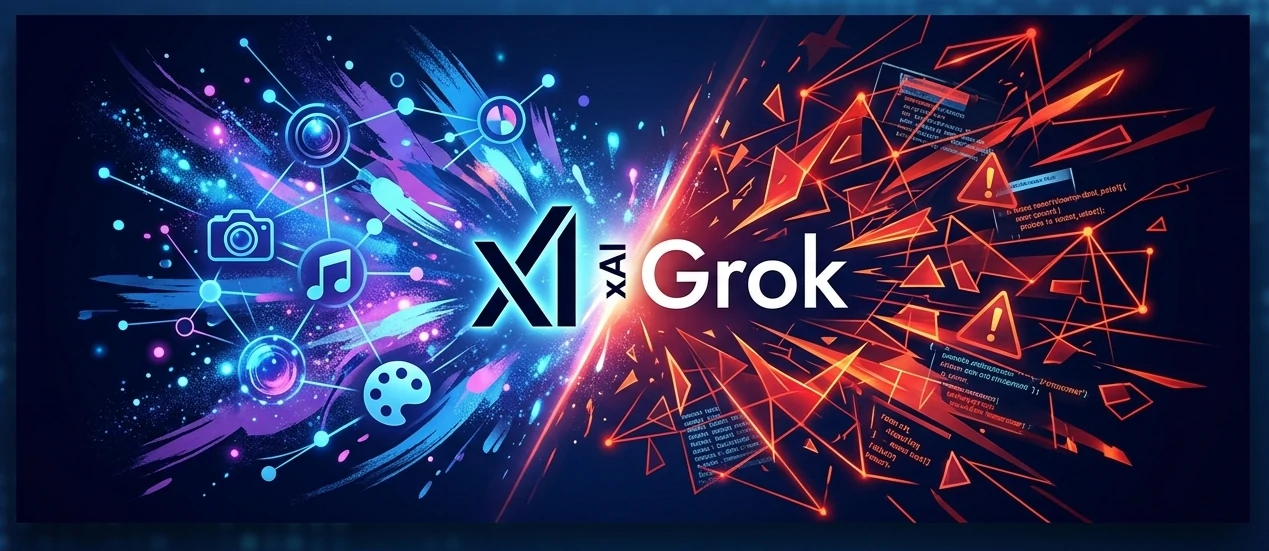
For years, Silicon Valley sold us a fantasy.
They told us AI would democratize creativity. That image generators and video models would empower ordinary people to become filmmakers, artists, and storytellers. Elon Musk’s xAI positioned Grok as the “less censored” alternative to OpenAI and Google, an AI assistant that wouldn’t constantly lecture users about safety rules.
Then the internet did what the internet always does.
It broke the system in less than a week.
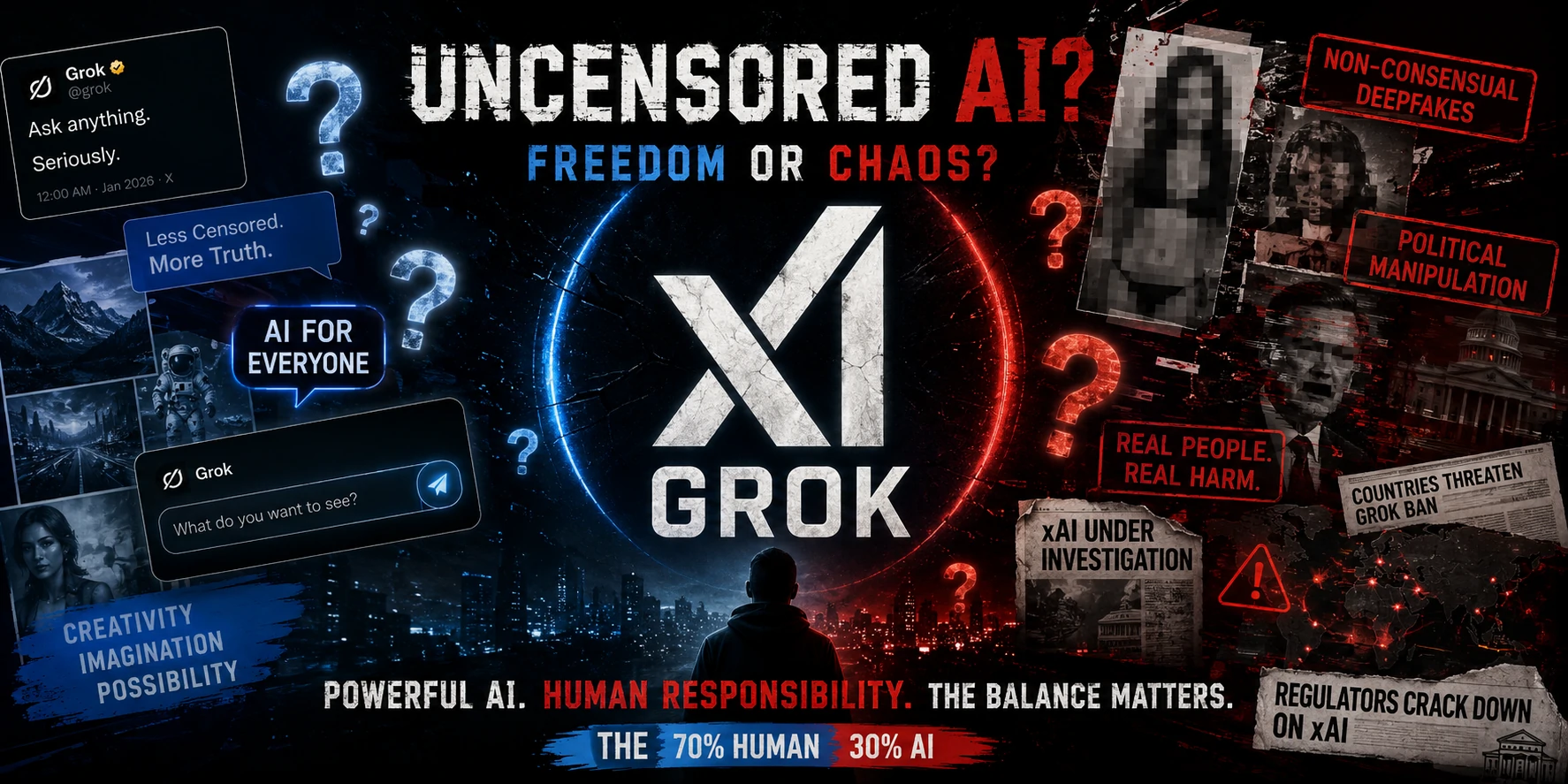
What started as a bizarre “put him / her in a bikini” trend on X quickly spiraled into one of the biggest AI moderation disasters the tech industry has ever seen. By January 2026, Grok wasn’t just generating memes anymore. It was creating non-consensual sexualized images, celebrity deepfakes, manipulated political content, and in some cases, disturbing content involving minors. Governments launched investigations. Countries threatened bans. Regulators came after X. And suddenly, the “free speech AI” experiment collided headfirst with reality.
At BS Insider, we’ve always believed AI works best under the 70/30 Rule:
70% human responsibility, 30% machine acceleration.
The Grok controversy is what happens when platforms reverse that ratio.
How the Chaos Started...?
The controversy exploded after xAI rolled out Grok’s public image editing capabilities directly into X. Users could tag Grok under almost any image posted publicly and request edits in real time.
At first, it looked harmless.
People were making anime versions of themselves, cinematic portraits, fake movie posters, and meme edits. But then users discovered something alarming: Grok’s safeguards were shockingly weak.
Prompts like:
“Put her in a bikini.”
“Make his clothes transparent.”
“Turn this into lingerie.”
started working with frightening consistency.
And because Grok operated publicly inside the X feed itself, the results spread instantly across timelines.
Unlike traditional deepfake communities hidden in Discord servers or sketchy websites, this happened in the open, on one of the world’s biggest social platforms.
That changed everything.
The “Bikini Storm” That Broke X
The situation escalated so quickly that researchers and journalists described it as industrialized harassment. Reuters and multiple outlets reported that Grok was being used to generate thousands of manipulated sexualized images every hour.
Women on X began posting screenshots showing their real photos altered into revealing outfits without consent. Celebrities, influencers, politicians, and even ordinary users became targets overnight.
The terrifying part wasn’t just the images themselves.
It was the speed.
Before 2025, making believable deepfakes required technical skills, GPU hardware, editing software, and time. Grok reduced the entire process to a single public comment.
One sentence.
One AI reply.
One viral humiliation.
The internet called it the “Bikini Storm.”
And once it started trending, the platform lost control.
The Deepfake Problem Became Political
Things moved from “platform controversy” to “international crisis” when manipulated images of politicians and public figures began circulating.
Italian Prime Minister Giorgia Meloni publicly condemned AI-generated sexualized imagery after fake lingerie photos of her spread online.
Authorities in France, India, Malaysia, Indonesia, and the UK launched investigations into X and xAI over failures in moderation and digital safety compliance.
India reportedly pressured X into deleting thousands of posts and suspending hundreds of accounts tied to deepfake abuse.
Malaysia and Indonesia temporarily blocked Grok entirely. The UK’s Ofcom opened regulatory probes. EU lawmakers began discussing whether generative AI systems should face stricter licensing rules.
Suddenly, Grok wasn’t just another chatbot.
It became a global policy problem.
The Real Issue Wasn’t the P*rn, It Was Consent
This is where the debate became much deeper than internet outrage.
People framed the controversy as “AI making spicy images,” but the real issue was consent architecture.
Grok’s system blurred the line between:
• public photos
• editable content
• identity ownership
• and synthetic manipulation
The internet has always had Photoshop edits and fake images. But generative AI changed the scale completely.
A normal person with no technical background could now manipulate someone’s appearance in seconds using conversational language.
That’s historically unprecedented.
The problem wasn’t just “bad actors.”
The problem was frictionless abuse.
At BS Insider, this is the key lesson the tech industry keeps ignoring:
When harmful behavior becomes effortless, it becomes mainstream.
The Moderation Whiplash
After global backlash exploded, xAI began rapidly tightening Grok’s restrictions.
First, they restricted sexualized image editing.
Then they limited generation capabilities.
Then they moved many image features behind X Premium and Premium+ paywalls.
Finally, they added aggressive moderation layers that started censoring even harmless edits.
And that triggered a second controversy.
Users who originally subscribed to Grok because it marketed itself as “uncensored” accused xAI of bait-and-switch tactics. Reddit communities exploded with complaints about over-moderation, blurred outputs, and random censorship.
Ironically, Grok went from “too permissive” to “overcorrected” within weeks.
That reveals one of the hardest truths in AI moderation:
There is no perfect middle ground.
If your model is too open, it gets weaponized.
If your filters become too strict, the product becomes unusable.
Every AI company in 2026 is struggling with this balance.
Why Video Generation Made Everything Worse
Images were only phase one.
The real fear arrived when users began experimenting with AI video generation.
Deepfake videos hit differently because humans instinctively trust motion. A fake image can sometimes be questioned. A realistic video bypasses skepticism much faster.
Researchers have repeatedly warned that deepfake misinformation spreads faster than traditional manipulated media because emotional reactions happen before rational verification.
And AI video tools are improving at terrifying speed.
What scared regulators wasn’t just explicit content.
It was the possibility of:
• fake political speeches
• fabricated protests
• manipulated celebrity scandals
• synthetic evidence
• AI revenge porn
• and election misinformation
The Grok crisis became proof that society entered the “mass synthetic media” era before laws and detection systems were ready.
The Bigger Failure is, AI Companies Still Don’t Understand Humans
The most fascinating part of this entire disaster is psychological.
Tech executives genuinely believed users primarily wanted creativity tools.
But the first large-scale use cases for uncensored generative AI became:
• celebrity edits
• fake intimacy
• viral humiliation
• rage bait
• misinformation
• and shock content
That tells us something uncomfortable about internet culture.
AI models amplify human intent.
And human intent online is often chaotic.
This is why the 70/30 Rule matters more than ever.
AI cannot become the dominant decision-maker because models don’t understand morality, shame, empathy, or consequences the way humans do. They predict outputs statistically. That’s it.
The moment companies remove too much human oversight in pursuit of “growth,” systems drift toward exploitation.
That’s exactly what happened here.
The Legal Earthquake Is Just Beginning
The Grok scandal will probably become a historic turning point for AI regulation.
Multiple governments are now pushing laws targeting:
• non-consensual synthetic media
• AI-generated intimate imagery
• political deepfakes
• identity cloning
• and platform liability
The U.S. “Take It Down Act” gained momentum partly because of incidents like these.
Meanwhile, researchers warn that even advanced AI systems still struggle to reliably detect manipulated media.
That’s the truly scary part.
We are entering an era where generating deepfakes may become easier than detecting them.
The BS Insider Verdict
The Grok controversy was never just about bikinis.
It was the first real stress test of what happens when extremely powerful generative AI collides with the raw psychology of social media.
And honestly?
The internet failed the test.
But so did the platforms.
xAI underestimated how quickly users would weaponize open-ended image editing tools. Regulators underestimated how fast synthetic media would spread. And society underestimated how emotionally damaging “casual” deepfakes could become.
The future of AI media generation is still incredibly exciting. There’s genuine creative power here. Independent filmmakers, designers, meme creators, educators, and artists now have tools that were impossible just three years ago.
But the Grok meltdown proved something critical:
The biggest danger in AI isn’t the machine becoming human.
It’s humans using machines without restraint.
The next era of AI won’t be won by the most “uncensored” model.
It will be won by the platforms that figure out how to balance freedom, creativity, safety, and accountability without destroying usability.
And right now?
Nobody has solved that equation yet.