Samsung One UI 8.5 Update: The Quiet Shift That Could Change the Smartphone War
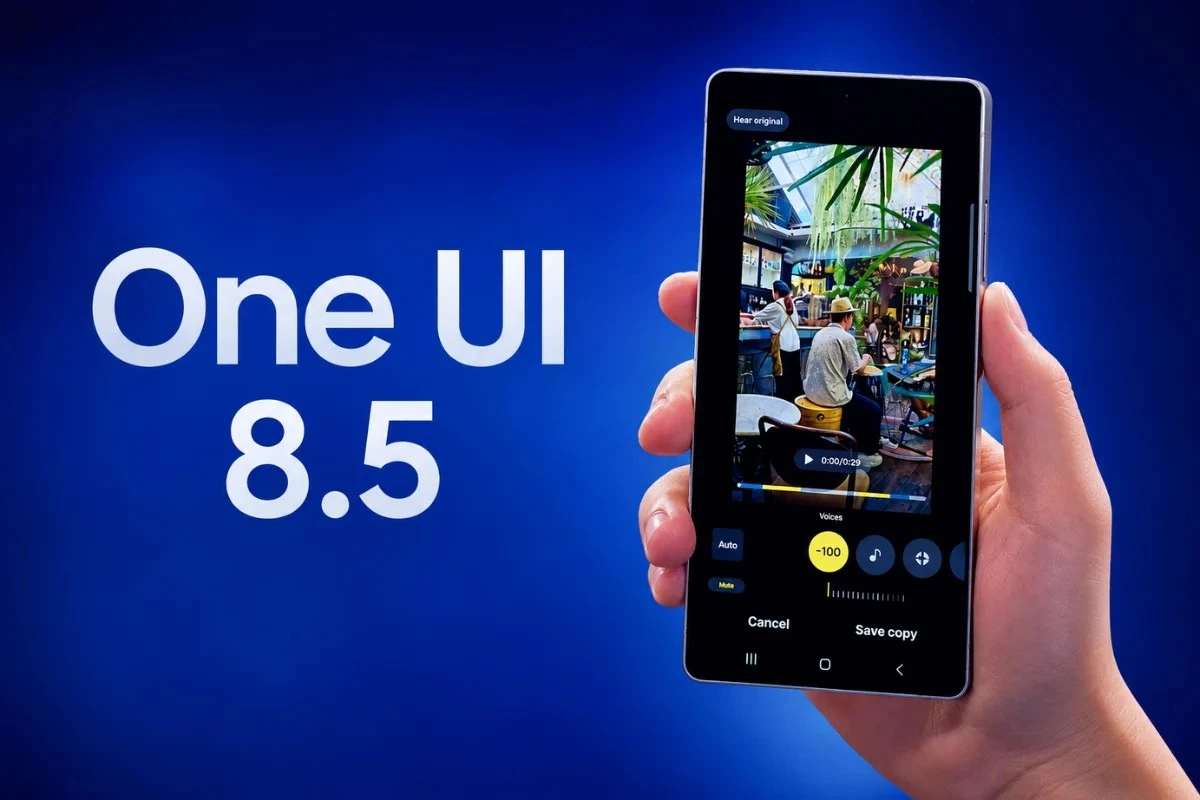
Samsung doesn’t usually change the game with a single update.
But One UI 8.5 feels different.
It doesn’t scream for attention. It doesn’t rely on flashy marketing. Instead, it slowly reshapes the way Galaxy users interact with their devices, layer by layer, until you realize something fundamental has changed:
Your phone is no longer just a phone.
It is becoming an AI-powered ecosystem hub.
And this update is the clearest signal yet.
The Real Story Behind One UI 8.5
On the surface, One UI 8.5 looks like a feature update:
Fully customizable Quick Settings panel
Improved Quick Share
Apple AirDrop compatibility
Enhanced Photo Assist
Perplexity-powered Bixby
Upgraded Samsung DeX
But that’s only the surface story.
The real transformation is deeper:
Samsung is rebuilding One UI around AI, interoperability, and productivity ecosystems.
From Fixed UI to Personal Control Center
For years, Android’s Quick Panel has been predictable.
One UI 8.5 changes that.
Now users can:
Move controls freely
Resize panels
Rebuild the layout based on usage habits
This may sound small — but it signals something big:
Samsung is shifting from “system design” to “user-designed OS.”
Your phone adapts to you, not the other way around.
Quick Share + AirDrop: The Unexpected Peace Treaty
For the first time, Samsung and Apple ecosystems are overlapping.
Quick Share now working with AirDrop is more than convenience, it’s strategic.
Because this removes one of Apple’s strongest ecosystem barriers:
closed-device exclusivity.
This means:
Android ↔ iPhone file sharing becomes seamless
Cross-platform friction drops dramatically
User dependency on a single ecosystem weakens
This is not just a feature.
It’s ecosystem warfare evolution.
The AI Upgrade Samsung Needed for Years (Bixby Reborn)
Bixby was once considered the weakest link in Samsung’s software ecosystem.
That changes with One UI 8.5.
Now powered with Perplexity integration, Bixby becomes:
Context-aware
Web-connected in real time
Natural language driven
Capable of system-level actions
Instead of commands like:
“Open settings”
You can now say:
“I want my phone to stop turning off when I’m reading”
And it understands intent.
This is the shift from assistant → AI agent.
Editing Becomes Intent-Based (Photo Assistant)
Samsung’s AI editing system now goes beyond filters.
You don’t edit manually anymore — you describe outcomes.
Example:
Remove background distractions
Change mood
Add or adjust objects
This pushes Galaxy AI closer to creative automation rather than manual editing.
DeX , the Silent Laptop Killer
Samsung DeX has always been underrated.
But One UI 8.5 strengthens it further.
With smoother performance and deeper integration, DeX moves closer to:
A true desktop environment inside your phone.
For professionals, this changes how portable workstations are defined.
The Larger Picture: Samsung’s Real Strategy
One UI 8.5 is not just competing with Android skins anymore.
It is competing with:
Apple ecosystem lock-in
Google AI integration
Microsoft productivity ecosystem
And it is doing something interesting:
Instead of locking users in…
It is opening itself outward.
Apple integration, AI integration, cross-device workflows — everything points to one direction:
Samsung is building an “open AI ecosystem layer” for mobile computing.
BS Insider Thought
We are slowly entering a phase where smartphone battles are no longer about hardware.
They are about:
AI intelligence
Ecosystem control
Cross-platform freedom
Software experience depth
And One UI 8.5 is one of the clearest signals of that shift.
So the real question is not:
“What features did Samsung add?”
But rather:
“Is Samsung quietly changing what a smartphone even is?”
So the real question is simple: are we still comparing phones… or are we now comparing entire ecosystems....?