How Sony Lost the Smartphone War Despite Being a Technology Giant
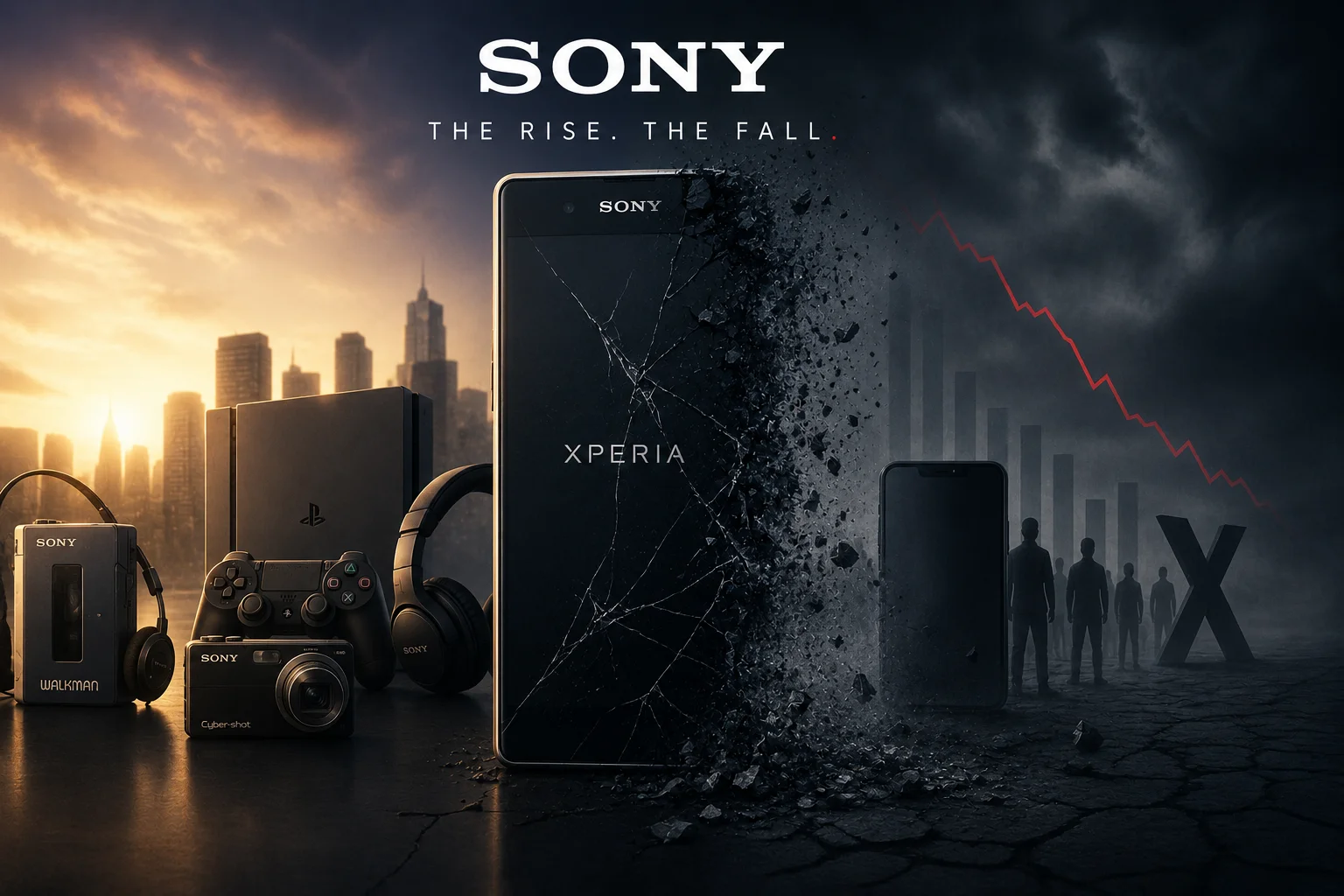
There’s something strangely tragic about Sony’s smartphone story.
This is the same company that helped define modern entertainment technology.
Sony gave the world:
Walkman
PlayStation
Trinitron TVs
Cyber-shot cameras
Alpha cameras
Blu-ray
iconic headphones
world-class image sensors
And yet somehow…
Sony failed in smartphones.
Not just “struggled.”
Not just “fell behind.”
Failed to become relevant in the single most important consumer technology market of the modern era.
That feels almost impossible when you think about it.
How does a company with:
elite camera technology
audio engineering dominance
entertainment ecosystems
gaming power
premium branding
decades of hardware expertise
lose to companies that barely existed two decades ago?
The answer is far more complicated than “bad phones.”
Because Sony’s phones were never truly bad.
In fact, sometimes they were ahead of everyone else.
And that’s what makes this story fascinating.
Sony Was Once One of the Coolest Phone Brands on Earth
Before iPhones dominated the world, Sony Ericsson phones were everywhere.
And honestly?
They were cool.
In the 2000s, Sony Ericsson devices felt futuristic.
People loved:
Walkman phones
Cyber-shot camera phones
stylish designs
music-centric branding
premium aesthetics
Phones like:
K750i
W800
C905
became legendary.
Sony Ericsson wasn’t just selling hardware.
It sold identity.
Owning a Walkman phone actually meant something culturally back then.
And unlike many competitors, Sony already understood multimedia better than almost anyone.
That was supposed to become their biggest advantage in the smartphone era.
Instead, it became one of the industry’s biggest missed opportunities.
The iPhone Changed the Entire Industry Overnight
Everything changed in 2007.
Apple introduced the iPhone.
And suddenly, the mobile industry stopped being about:
buttons
specs
camera megapixels
ringtone culture
It became about ecosystem, software, touch interfaces, and simplicity.
This shift destroyed many legacy brands.
Nokia collapsed.
BlackBerry collapsed.
HTC faded.
Motorola struggled.
Sony survived longer than some of them — but never truly adapted either.
The company still thought like a hardware manufacturer in a world becoming software-driven.
That mistake changed everything.
Sony Had the Technology… But Never the Ecosystem
This is probably the most important reason Sony failed.
Sony had incredible individual technologies.
But smartphones required integration.
Apple succeeded because:
hardware
software
apps
services
ecosystem
marketing
all worked together seamlessly.
Sony, meanwhile, felt fragmented.
Its divisions often operated separately:
PlayStation
Xperia
Alpha cameras
entertainment
audio
Instead of building one connected ecosystem, Sony often behaved like multiple companies sharing the same logo.
And users noticed.
People kept asking:
“Why doesn’t Sony integrate PlayStation better?”
“Why aren’t Xperia cameras dominating?”
“Why doesn’t Sony use its entertainment empire better?”
Even today, many tech enthusiasts feel Sony never fully connected its strengths into one unified mobile experience.
Xperia Phones Became Too Niche
Sony slowly turned Xperia into an enthusiast-only brand.
And that was dangerous.
Modern smartphone success requires scale.
Samsung sells phones for everyone.
Apple simplifies products for everyone.
Sony increasingly built phones for a tiny audience:
photography enthusiasts
audio purists
hardcore Android fans
That sounds good creatively.
But terrible commercially.
Many Xperia devices included features enthusiasts loved:
headphone jack
microSD support
manual camera controls
physical shutter button
minimalist Android experience
But mainstream buyers didn’t care enough.
And according to multiple industry reports, Sony’s smartphone sales kept collapsing year after year. (Android Central)
At one point, Sony reportedly sold only 600,000 smartphones in a quarter globally. (Notebookcheck)
That’s tiny compared to Apple or Samsung shipping tens of millions.
Sony’s Biggest Irony: Everybody Uses Sony Cameras Except Sony Phones
This is the cruelest part of the story.
Sony dominates smartphone camera sensors.
Apple uses Sony sensors.
Samsung uses Sony sensors.
Chinese brands use Sony sensors.
Sony literally powers the smartphone photography industry behind the scenes.
And yet Xperia phones themselves never became camera kings commercially.
Why?
Because smartphone photography isn’t just hardware anymore.
It’s computational photography.
Apple and Google mastered image processing.
Samsung mastered social-media-ready photography.
Sony focused heavily on giving users “professional control.”
But most people don’t want DSLR-style complexity in a phone camera.
They want:
point
click
instant perfect image
Sony misunderstood mainstream behavior for too long.
The Huge Pricing Hurt Sony Badly
Another major issue:
Sony phones were often extremely expensive.
Sometimes more expensive than Samsung and dangerously close to iPhone pricing.
That created a huge psychological problem.
Consumers asked:
“If I’m already paying flagship money… why not just buy iPhone or Galaxy?”
Sony lacked the ecosystem strength and marketing power to justify those prices for mainstream audiences.
Even loyal Xperia users complained about pricing repeatedly online. (Reddit)
And unlike Apple, Sony didn’t have the retail dominance or carrier relationships to support premium pricing globally.
Marketing Was Shockingly Weak
This is one of the most overlooked reasons.
Sony barely marketed Xperia properly compared to competitors.
Samsung floods the planet with advertising.
Apple turns launches into cultural events.
Chinese brands aggressively dominate online marketing.
Sony often felt invisible.
Even tech communities noticed this.
One Reddit user described Sony’s product communication as lacking excitement, hype, and emotional energy. (Reddit)
Another discussion questioned why reviewers rarely even discuss Xperia phones despite their unique features. (Reddit)
And honestly, they had a point.
Sony phones frequently launched quietly with minimal buzz.
In the smartphone industry, invisibility is death.
Sony Kept Changing Direction
Sony’s mobile strategy constantly shifted.
The company:
downsized divisions
cut markets
changed lineups
abandoned series
restructured branding
Over time, Xperia became confusing for normal consumers.
The company also exited many international markets quietly.
Users in several regions simply stopped seeing Sony phones in stores.
And once visibility disappears, relevance disappears too.
According to reports, Sony deliberately downsized its Xperia division while focusing only on profitable premium devices. (PhoneArena)
Financially, that may have made sense.
But culturally, it accelerated Xperia’s disappearance from mainstream conversation.
Sony Failed at Timing
Sony was often early.
Too early.
Examples:
4K phone displays
cinematic aspect ratios
pro-level camera controls
But timing matters in technology.
Features ahead of their time don’t always become advantages.
Sometimes they confuse consumers instead.
Meanwhile competitors focused on:
battery life
simplicity
social media optimization
AI photography
app ecosystems
Things average buyers actually noticed daily.
Sony built impressive technology.
Competitors built addictive user experiences.
Huge difference.
The Smartphone Industry Became Brutal
To be fair, surviving the smartphone industry became insanely difficult.
Even giant companies struggled.
Margins shrank.
Competition exploded.
Chinese brands aggressively undercut prices.
Today the market is dominated by:
Apple
Samsung
Chinese giants
Smaller players barely survive.
According to industry estimates, Sony’s smartphone market share dropped below 1%. (TechSpot)
That’s astonishing for a company of Sony’s scale and legacy.
But Xperia Never Truly Died
And this is where the story becomes interesting again.
Despite years of decline, Sony refuses to quit smartphones.
Executives continue describing Xperia as strategically important. (TechSpot)
Why?
Because smartphones still matter as:
entertainment devices
camera showcases
communication platforms
ecosystem entry points
Sony may not dominate smartphones anymore, but Xperia still acts as a technological showcase for Sony’s broader ecosystem.
And oddly enough, Xperia has built a small but extremely loyal cult following.
Some users genuinely love:
the minimalist software
pro camera features
headphone jack
unique design philosophy
lack of trend-chasing
Sony stopped trying to win everyone.
Instead, it accidentally became a niche enthusiast brand.
The Real Lesson Behind Sony’s Failure
Sony’s smartphone collapse teaches something much bigger about modern technology.
Having great hardware is no longer enough.
The smartphone era became about:
ecosystems
software
services
AI
integration
marketing
emotional connection
Sony mastered components.
Apple mastered experiences.
And in the modern tech world, experiences usually win.
That’s the painful truth.
My Final Thoughts
Honestly, Sony’s mobile story feels almost unreal.
A company that helped shape modern entertainment technology somehow lost the most important consumer technology battle of the 21st century.
And yet…
There’s still something admirable about Xperia.
Sony refused to completely copy everyone else.
Even while failing commercially, Xperia phones kept doing weird, enthusiast-focused things:
headphone jacks
microSD cards
camera-first design
cinematic displays
manual photography controls
In a world where every smartphone increasingly looks and feels identical, Sony remained stubbornly different.
Maybe that’s why Xperia still has loyal fans despite tiny market share.
Sony didn’t fail because it lacked innovation.
It failed because innovation alone is no longer enough.
In the smartphone era, the companies that win are the ones that control the entire experience — not just the technology.
And unfortunately for Sony, that realization came too late.
The Conclusion
In the end, Sony’s smartphone story isn’t just about failed sales or declining market share. It’s a reminder that in modern technology, even the biggest innovators can fall behind if they misunderstand how people actually use technology. Sony built incredible devices, but the smartphone era was never won by hardware alone — it was won by ecosystems, simplicity, software, and emotional connection.
And maybe that’s the strangest part of all.
Even after losing the smartphone war, Sony still remains one of the most respected technology companies on Earth.