Googlebook Isn’t Just a Laptop… It’s Google’s Most Dangerous Bet in 15 Years
For over a decade, Chromebooks survived on one thing: simplicity.
Cheap hardware.
Fast boot times.
A browser-based experience.
And just enough performance for schools, students, and casual users.
But let’s be honest.
Nobody ever walked into a café, opened a Chromebook, and made everyone around them stare.
Chromebooks were practical.
MacBooks were aspirational.
And Google knew it.
That’s why what happened in 2026 matters far more than most people realize.
Because Google didn’t just launch another Chromebook.
It launched an entirely new vision for personal computing.
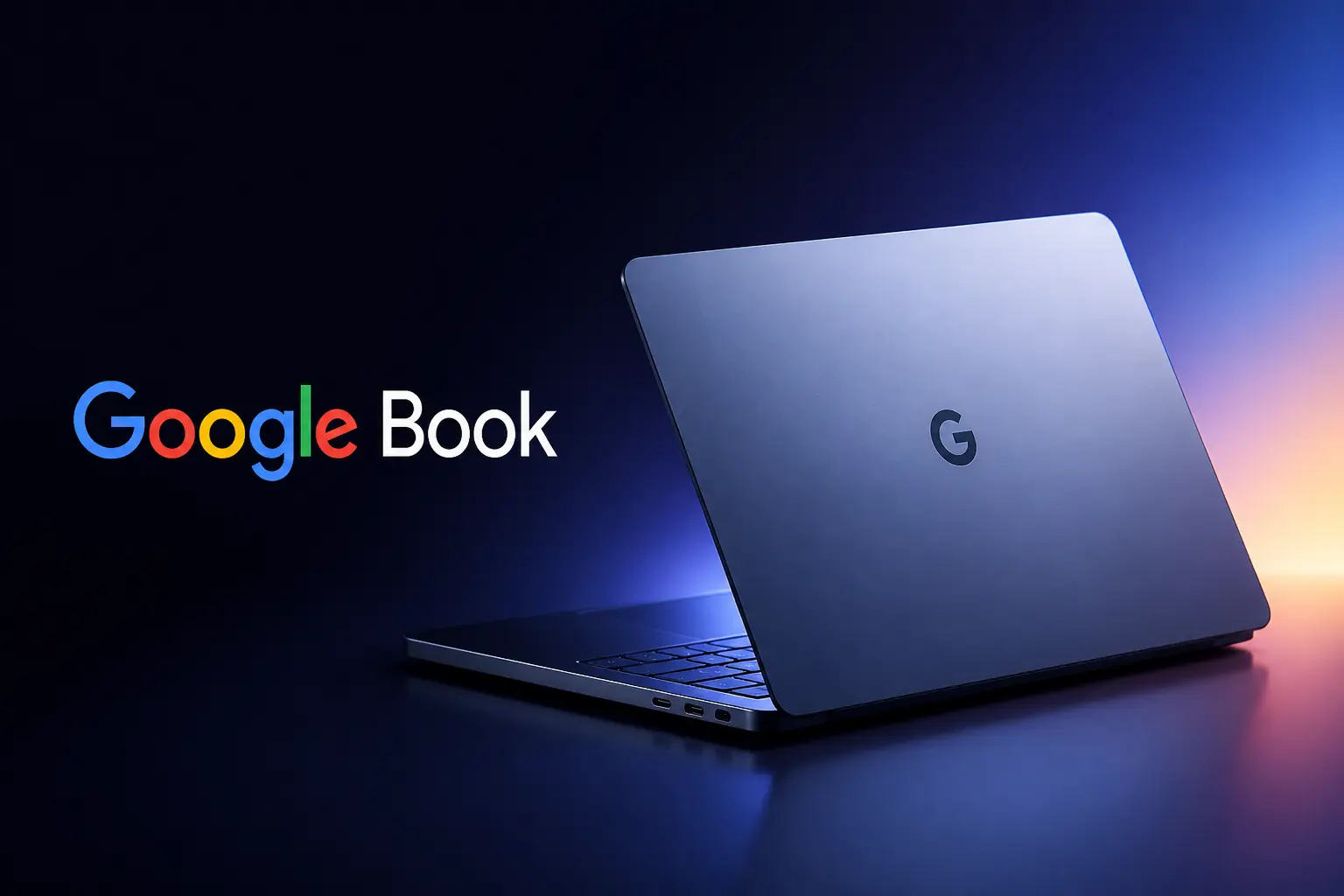
It’s called the Googlebook.
And after studying the platform deeply, reading industry reactions, developer discussions, hardware leaks, and Google’s own ecosystem strategy, one thing became very clear:
Googlebook is not trying to compete with Chromebooks.
It’s trying to compete with the MacBook itself.
And maybe even replace the traditional desktop operating system entirely.
Why Google Created Googlebook...?
On the surface, Googlebook looks like a rebrand.
A premium AI-focused laptop platform powered by Android and Gemini AI. (WIRED)
But underneath that marketing language is something much bigger.
For years, Google had a strange problem:
Android dominated phones.
Chrome dominated browsers.
But Windows and macOS still controlled “serious computing.”
Google never truly owned productivity.
ChromeOS helped in education markets, but professionals still viewed Chromebooks as “internet laptops.”
That reputation became impossible to escape.
Even when Chromebooks became more powerful…
even when Linux apps arrived…
even when Android app support improved…
People still treated them as secondary machines. (Android Central)
Googlebook changes that strategy completely.
Instead of building another browser-first laptop, Google is now building an AI-first laptop ecosystem.
That distinction changes everything.
ChromeOS Was Built for the Cloud.
Googlebook Is Built for AI.
This is the biggest shift people are missing.
ChromeOS was designed around web apps and internet connectivity.
Googlebook is designed around contextual intelligence.
That means Gemini isn’t just an assistant sitting in the corner anymore.
It becomes part of the operating system itself. (PCWorld)
And honestly?
That’s both exciting and terrifying.
Google demonstrated something called “Magic Pointer.”
At first it sounds gimmicky.
You shake your cursor…
Gemini appears…
and it starts understanding what’s on your screen.
Hover over a date?
It suggests calendar actions.
Point toward images?
It offers editing and combining tools.
Highlight information?
It summarizes, rewrites, organizes, or searches contextually. (Gizmochina)
This is not the traditional “open app, perform task” workflow anymore.
Google wants computing to become predictive.
The laptop watches context and assists before you even ask.
That’s the actual vision.
And whether people like it or not, this is probably where the entire industry is heading.
Is Google Introducing an “AI Operating System” ...?
This is where things become fascinating.
Most companies are adding AI features to existing systems.
Google appears to be rebuilding the system around AI itself.
That’s a major difference.
Windows still feels like Windows with Copilot added on top.
macOS still feels like macOS with Apple Intelligence slowly layered in.
But Googlebook?
It feels like Gemini came first…
and the operating system was built around it afterward.
Several reports describe Googlebook not even as a traditional OS, but as an “intelligence system.” (AfterDawn)
That wording matters.
Because Google no longer wants users to think about apps, folders, or workflows.
It wants users to think in intentions.
“Write this.”
“Organize that.”
“Compare these.”
“Turn this into something useful.”
The AI handles the complexity underneath.
And if Google succeeds, it could fundamentally change how younger generations interact with computers.
Android Is Finally Becoming a Real Desktop Platform
This might actually be the biggest story of all.
For years, Android tablets struggled because Android apps were designed primarily for phones.
Even Google’s own Pixelbook experiments showed the problem clearly. Android apps worked — but often awkwardly on large screens. (Android Central)
Now Google seems determined to fix that permanently.
Googlebook reportedly combines Android’s application ecosystem with desktop-style workflows and Chrome-level browsing capabilities. (Business Standard)
That’s huge.
Because Android already has billions of apps.
Billions of users.
And one of the world’s largest developer ecosystems.
If Google successfully transforms Android into a proper desktop-grade environment, Microsoft and Apple suddenly face something very dangerous:
A unified ecosystem spanning phones, tablets, laptops, TVs, cars, and AI assistants.
That’s not just competition anymore.
That’s platform domination.
But Here’s the Catch Nobody Wants to Talk About
Google has a history.
And that history makes people nervous.
Google kills products.
Constantly.
Stadia.
Google Plus.
Inbox.
Pixel Slate.
Hangouts.
And countless experimental services.
That creates trust issues.
Even now, many users are asking:
“Will Googlebook still exist in five years?”
And honestly…
that concern is completely valid.
The internet is already filled with skepticism about whether Googlebook is truly necessary or whether it’s just another rebranding experiment. (The Verge)
Some critics argue many of these AI features could simply be added to ChromeOS.
Others believe Googlebook exists primarily to push Gemini deeper into people’s lives. (PCWorld)
And there’s another issue.
Privacy.
The Gemini Problem
This part matters more than the flashy demos.
Recently, users discovered that Chrome had quietly installed large Gemini AI components onto devices automatically. That sparked major privacy backlash. (Android Central)
People are beginning to realize something uncomfortable:
AI-powered systems require massive contextual awareness.
That means understanding your files.
Your browsing.
Your habits.
Your writing style.
Your activity.
The smarter the assistant becomes…
the more data it needs.
Google says much of this processing can happen locally for better security and speed.
But trust is no longer automatic in the AI era.
And if Googlebook becomes deeply integrated into daily workflows, users will eventually ask a serious question:
“How much does Gemini actually know about me?”
That debate is only beginning.
Why Apple Should Actually Be Worried...?
Ironically, Googlebook may threaten Apple more than Microsoft.
Why?
Because Apple dominates through ecosystem loyalty.
iPhone + MacBook + AirPods + iCloud.
That seamless integration keeps users locked in.
But Googlebook could potentially create something similar for Android users.
Imagine this future:
Your Android phone instantly syncs with your laptop.
Apps transfer live between devices.
Gemini understands your workflow across all screens.
Notifications, files, AI tasks, widgets, and conversations move seamlessly everywhere.
Suddenly Android users no longer need to “switch to Mac” for ecosystem convenience.
That’s dangerous for Apple.
Especially in countries where Android dominates the smartphone market already.
So… Is Googlebook the Future ...?
Honestly?
Maybe.
But not because of the hardware.
The hardware itself still feels secondary.
The real experiment is behavioral.
Google is testing whether people are ready for AI-first computing.
Not AI as a feature.
AI as the foundation.
That’s the difference.
And the scary part?
Younger users may adapt to this incredibly fast.
Students growing up with AI assistants may eventually find traditional desktop systems outdated and inefficient.
Opening folders manually.
Searching for files manually.
Managing windows manually.
All of that could start feeling “old.”
Googlebook seems designed for that next generation.
My Final Thoughts
The original Chromebook changed education.
Googlebook could attempt something far bigger:
changing the definition of the personal computer itself.
Will it succeed?
That depends on three things:
Trust.
Developer support.
And whether people truly want AI woven into every layer of computing.
Because this isn’t just another laptop launch.
It’s Google trying to redesign the relationship between humans and computers.
And whether people realize it yet or not…
The AI laptop war has officially begun.